
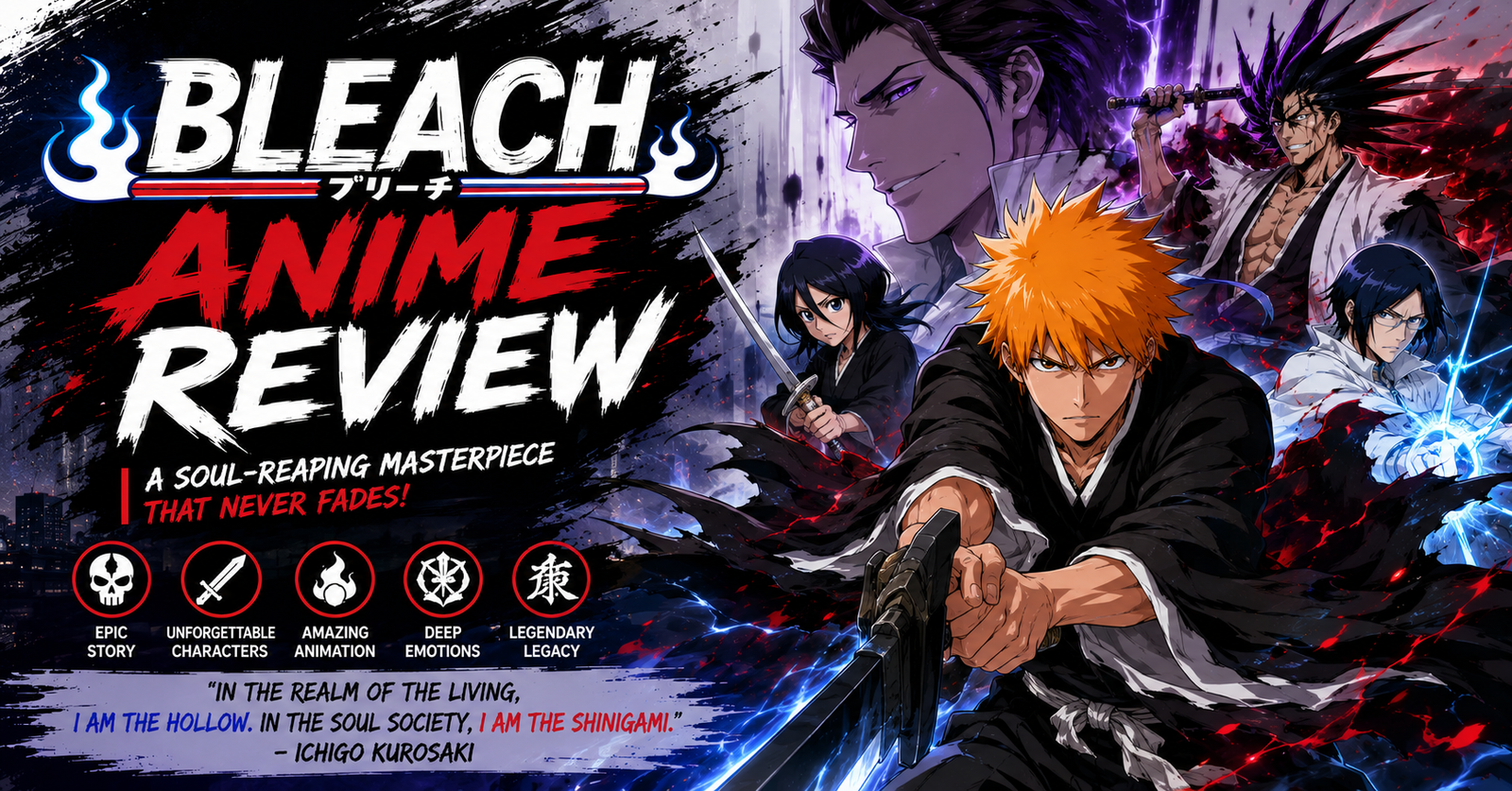

After a decade-long wait, Bleach: Thousand-Year Blood War has closed the book on Tite Kubo’s original story with its fourth and final part, The Calamity. This review covers the story, the direction and studio work behind the revival, the voice cast, the score, and whether the finale sticks the landing after four years of buildup.
What Is Thousand-Year Blood War About?
Based on the final arc of Tite Kubo’s Bleach manga, Thousand-Year Blood War picks up after a lengthy time skip, throwing Ichigo Kurosaki and the Soul Society into a full-scale invasion led by Yhwach and his army of Quincy soldiers known as the Sternritter. Unlike earlier arcs that built tension slowly, this storyline moves with urgency from its opening episode, stripping away side characters’ power in an early assault and forcing the Gotei 13 into a war they’re not prepared for. The final part, The Calamity, adapts the manga’s last chapters and brings the Ichigo-versus-Yhwach conflict, along with the fates of Kisuke Urahara, Yoruichi Shihoin, and Uryu Ishida, to a close.
Direction and Production Behind the Revival
Studio Pierrot returned to produce the adaptation, with Tomohisa Taguchi serving as series director across all four parts, a notable shift from Noriyuki Abe, who directed the original 2004-2012 run. Taguchi’s direction leans into sharper, more fluid animation that reflects over a decade of advancement in production techniques, giving fight choreography a weight and clarity that the earlier series occasionally struggled to maintain. For The Calamity specifically, Hikaru Murata joined as director alongside Taguchi, helping manage a season built around several major battles unfolding in parallel rather than a single drawn-out confrontation.
Voice Cast: Familiar Voices Carrying the Weight
Masakazu Morita reprises Ichigo Kurosaki in Japanese, delivering a more weathered, hardened performance suited to a character who’s been through years of loss by this point in the story. Fumiko Orikasa returns as Rukia Kuchiki, and the supporting Soul Reaper cast largely carries over from the original series, giving the revival a strong sense of continuity despite the long gap between the last original episode and this arc’s start. On the English dub side, Johnny Yong Bosch continues as Ichigo, joined by Michelle Ruff as Rukia, with the English cast maintaining the same consistency that’s defined the franchise’s dub since the mid-2000s.
The Score: Shiro Sagisu Returns
Composer Shiro Sagisu came back to score the entire Thousand-Year Blood War adaptation, blending new orchestral and choral pieces with reworked versions of classic themes from the original series. For The Calamity, the score leans harder into large-scale, almost operatic arrangements befitting a finale of this scope, while still finding room for the quieter, more personal musical cues the series has always used to underscore character moments. It’s some of Sagisu’s most ambitious work on the franchise, matching the scale of the story it’s paired with.
How The Calamity Closes the Story
The Calamity runs a tighter ten episodes compared to the thirteen or fourteen of earlier parts, a structural choice that has drawn some discussion among longtime followers given how much ground the final arc needs to cover. Despite the shorter episode count, the season is dense, with the story adapting the manga’s closing chapters and running multiple major confrontations concurrently rather than isolating them into separate story beats. For a franchise that spent years building toward this moment, the pacing choice reflects confidence in delivering a focused, momentum-driven ending rather than stretching the finale unnecessarily.
Is Thousand-Year Blood War Worth Watching?
Absolutely, especially for anyone who watched the original series and wondered if it would ever get a proper conclusion. The animation quality is a clear step up from the 2004-2012 run, the pacing rarely drags the way earlier arcs sometimes did, and the emotional payoff for characters who’ve been part of this story since the beginning feels genuinely earned. New viewers are still better served starting with the original series first, since the emotional weight of this finale depends heavily on relationships built over hundreds of earlier episodes.
Frequently Asked Questions
Do I need to watch the original Bleach series before Thousand-Year Blood War?
Yes. Thousand-Year Blood War is a direct continuation and assumes familiarity with characters, relationships, and events established across the original 366-episode run.
Who directs Bleach: Thousand-Year Blood War?
Tomohisa Taguchi has directed the series since it began, with Hikaru Murata joining as director for the final part, The Calamity.
Who composed the music for Thousand-Year Blood War?
Shiro Sagisu, the original series’ composer, returned to score the entire revival, blending new material with reworked classic themes.
How many episodes does The Calamity have?
The Calamity runs for ten episodes, shorter than the thirteen to fourteen episodes of the previous three parts.
Does Thousand-Year Blood War finish the manga’s story?
Yes. The Calamity adapts the final chapters of Tite Kubo’s manga, bringing the main storyline to its conclusion.
HiAnimes.us is a free source for your day-to-day anime reviews and a trusted guide for safe streaming. Whether you’re catching up before the finale or watching Thousand-Year Blood War for the first time, we’re here to help you make informed viewing choices.




Leave a Reply