
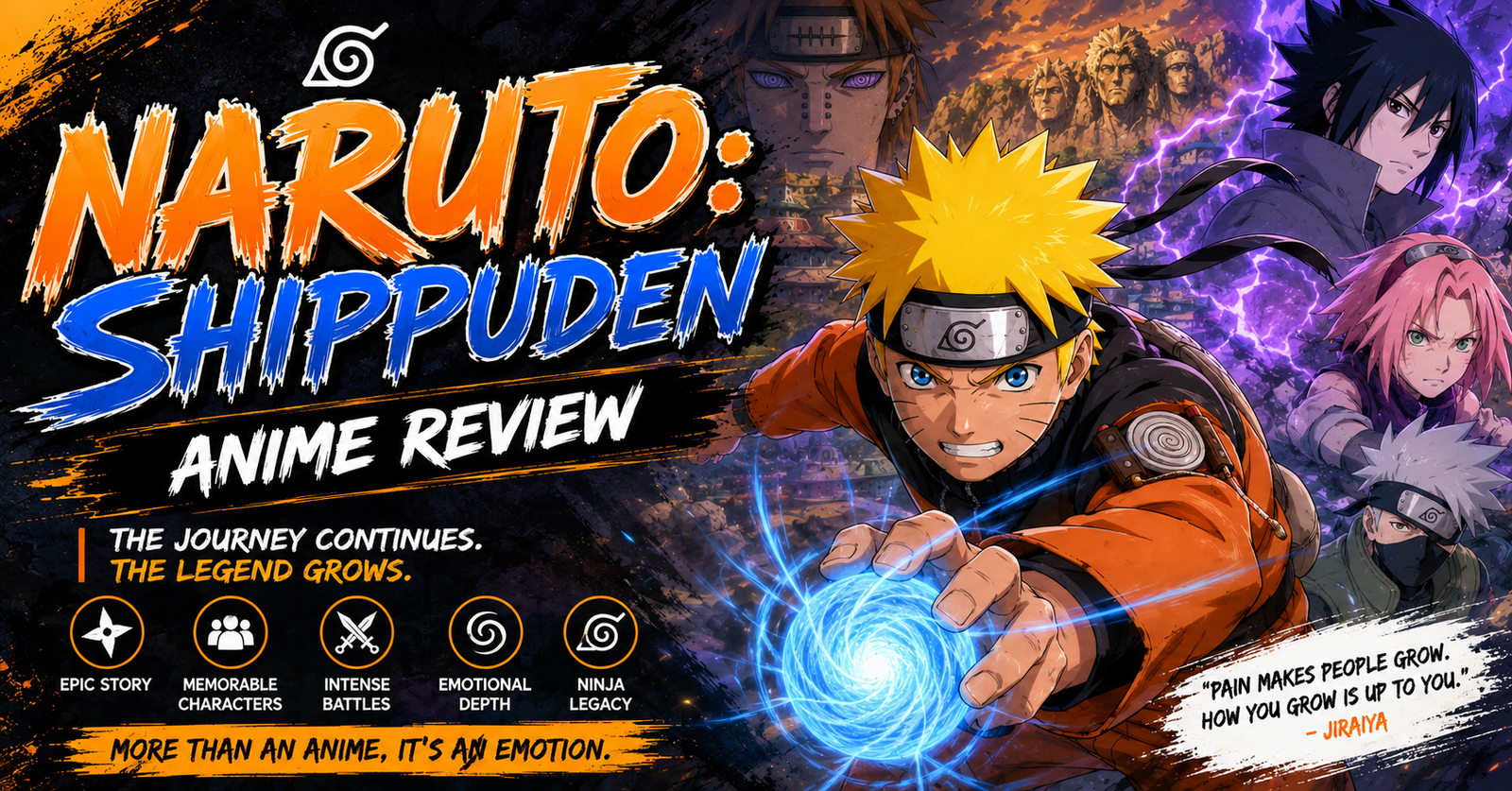

Naruto: Shippuden picks up two and a half years after the original series ends, and almost everything about it feels heavier. The stakes are higher, the animation is sharper, and the characters carry real scars from the choices they made as kids. This review looks at the story, the people who made it, the voice performances, and the score that turned it into one of the most-watched sequels in anime history.
What Happens in Naruto: Shippuden?
Based on Masashi Kishimoto’s manga, Shippuden follows Naruto Uzumaki returning to the Hidden Leaf Village after years of training under Jiraiya. The world has changed while he was gone. The Akatsuki, a criminal organization hunting tailed-beast hosts, is closing in on targets one by one, and Naruto’s old teammate Sasuke Uchiha has drifted further into darkness in his pursuit of revenge. What follows is a sprawling narrative covering the Akatsuki’s schemes, the Fourth Great Ninja War, and Naruto’s own path toward becoming Hokage. It’s less about tournament arcs and more about consequences, loss, and what people become after trauma.
Direction and Production Quality
Hayato Date returned to direct Shippuden, continuing his work from the original series and maintaining a consistent visual language across the franchise. Studio Pierrot handled production once again, and the improvement in animation fidelity is noticeable almost immediately: fight choreography gets more fluid, backgrounds carry more detail, and key emotional scenes are given more time to breathe. The show still leans on filler content between manga-adapted arcs, but the core story arcs, particularly the Pain invasion and the Fourth Shinobi World War, are some of the best-produced sequences in the franchise.
Voice Cast: Japanese and English Performances
The Japanese voice cast largely reprises their roles from the original series, with Junko Takeuchi continuing as Naruto and Noriaki Sugiyama returning as Sasuke, both performances deepening as the characters mature into more complicated people. On the English dub side, Maile Flanagan carries Naruto across hundreds of episodes with a performance that shifts convincingly from goofy determination to genuine gravity during the war arcs. Yuri Lowenthal voices Sasuke with a controlled coldness that fits his descent, while Kate Higgins as Sakura and Dave Wittenberg as Kakashi round out a main cast that keeps the emotional core intact through the English adaptation. Newer characters introduced in this arc, including Sai and Yamato, are voiced by Benjamin Diskin and Troy Baker respectively, and both quickly become standout parts of the ensemble.
The Score: A New Composer, A New Tone
One of the clearest signals that Shippuden is a different show is the music. Composer Yasuharu Takanashi took over scoring duties from Toshio Masuda, who had defined the sound of the original series. Takanashi’s work leans further into orchestral and rock arrangements suited to a story now centered on war and loss, while still preserving the traditional instrumentation that gave the franchise its identity. Tracks from this era have become some of the most recognizable pieces in anime music, frequently used well outside the context of the show itself.
Pacing and Filler: The Honest Take
Shippuden’s biggest criticism is consistent across almost every review of the series: filler. Stretches of original, non-canon content interrupt momentum at points, and it can test patience for viewers chasing the main story. That said, once the series locks into its major arcs, the payoff is worth the wait. The war arc alone recontextualizes nearly every major antagonist introduced across the franchise, giving villains motivations that feel earned rather than convenient.
Is Naruto: Shippuden Worth Watching?
For fans of the original series, yes, without hesitation. The character writing matures alongside its cast, the animation quality improves substantially, and the ending delivers a genuinely satisfying conclusion to a story that started with a lonely kid pulling pranks for attention. It’s a rare long-running shonen sequel that mostly earns its length.
Frequently Asked Questions
Do I need to watch the original Naruto before Shippuden?
Yes. Shippuden is a direct continuation, and character relationships, backstories, and emotional stakes depend heavily on the original series.
Who composed the music for Naruto: Shippuden?
Yasuharu Takanashi composed the score, taking over from Toshio Masuda, who scored the original series.
Who directed Naruto: Shippuden?
Hayato Date directed the series, with Studio Pierrot handling production, continuing from the original Naruto anime.
How many episodes does Naruto: Shippuden have?
The series ran for 500 episodes, covering the manga’s Part II storyline along with additional filler arcs.
Is Naruto: Shippuden better than the original Naruto?
It’s less a matter of “better” and more a natural evolution. Shippuden benefits from higher stakes and improved animation, but it depends entirely on the groundwork the original series lays.
HiAnimes.us is a free source for your day-to-day anime reviews and a trusted guide for safe streaming. Whether you’re catching up on a classic like Naruto: Shippuden or deciding what to watch next, we’re here to help you make informed viewing choices.



Leave a Reply