
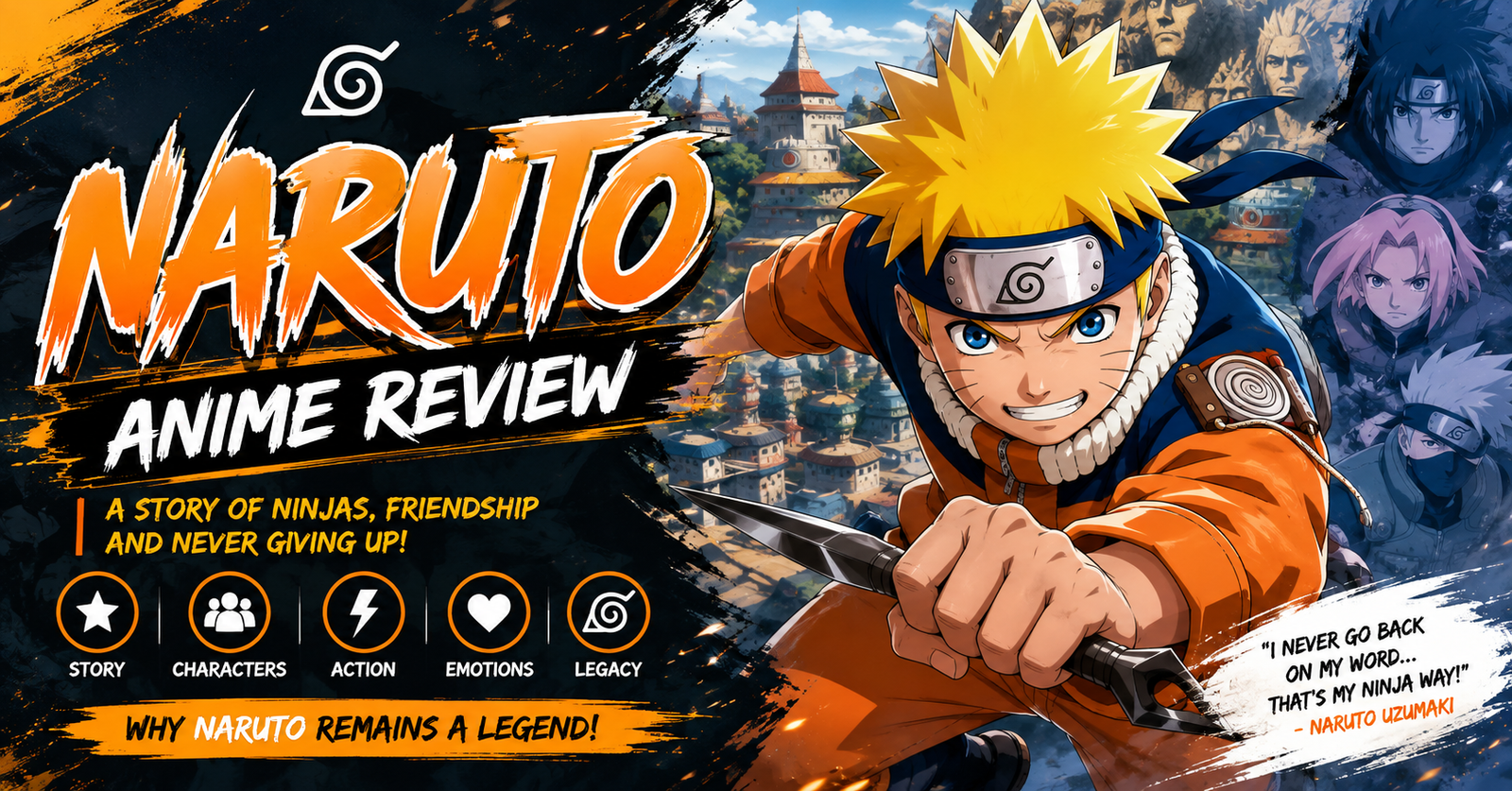

Few anime titles have shaped the genre quite like Naruto. Based on Masashi Kishimoto’s manga, the series turned a lonely, prank-loving ninja into one of the most recognizable characters in animation history. This review breaks down the story, the people behind the camera, the voices behind the characters, and the sound that made the show unforgettable.
What Is Naruto About?
At its core, Naruto follows Naruto Uzumaki, a young ninja from the Hidden Leaf Village who carries a destructive nine-tailed fox spirit sealed inside him. Shunned by his own village as a child, Naruto’s driving goal is simple yet powerful: earn the respect of his peers and one day become Hokage, the village’s leader. Alongside teammates Sasuke Uchiha and Sakura Haruno, under the guidance of the laid-back but brilliant Kakashi Hatake, Naruto grows from an underestimated outcast into a hero capable of ending cycles of war and hatred.
The series is split into two arcs, the original Naruto and its sequel Naruto: Shippuden, together spanning hundreds of episodes that track Naruto’s transformation from academy student to Hokage. What makes the narrative work isn’t just the fights, it’s the emotional throughline of found family, forgiveness, and perseverance.
The Director and Studio Behind the Anime
The anime adaptation was directed by Hayato Date and produced by Studio Pierrot, the same animation house responsible for other genre staples. Date’s direction is a big reason the series balances slower, character-driven arcs with explosive action sequences without losing tonal consistency across hundreds of episodes. Studio Pierrot’s visual identity, expressive character work paired with dynamic camera movement during battles, became a template that later shonen productions would borrow from.
The Voice Cast That Brought the Characters to Life
A big part of what makes Naruto’s journey land emotionally is the voice work. In the original Japanese version, Junko Takeuchi voices Naruto with a scratchy, determined energy that suits his underdog persona perfectly. The English dub cast is equally memorable, with performances that gave international audiences a version of Naruto that felt just as sincere and energetic as the source material. Supporting performances for Sasuke, Sakura, and Kakashi round out a cast that manages to sell both comedic banter and gut-punch dramatic moments.
The Sound That Defines Naruto
Music plays an outsized role in Naruto’s identity. Composer Toshio Masuda scored the original series, blending traditional Japanese instruments like the shamisen and shakuhachi with rock elements to create a sound that felt both ancient and modern. When Naruto: Shippuden began, composer Yasuharu Takanashi took over scoring duties, shifting the tone to match a more mature, war-driven storyline while keeping the emotional core intact. Tracks composed during this era have taken on a life of their own, frequently referenced in internet culture well beyond the anime community.
Animation, Pacing, and the Filler Debate
No honest review can skip the elephant in the room: pacing. Naruto is notorious for filler arcs, original content not adapted from the manga, that sometimes slows momentum. That said, the core adapted arcs, particularly the Chunin Exams, the Sasuke Retrieval arc, and the Fourth Great Ninja War, remain some of the best-executed storytelling in shonen anime. The animation quality noticeably improves during Shippuden, with fight choreography that holds up well even by modern standards.
Naruto vs. Naruto Shippuden: What’s the Difference?
The original Naruto covers Naruto’s pre-teen years and the formation of Team 7. Shippuden picks up two and a half years later, following a time skip, and dives into higher stakes: the Akatsuki organization, tailed-beast lore, and the eventual world war that closes out the series. Newcomers often ask which one to start with, the answer is simple: start from the beginning, since character relationships and emotional payoffs depend heavily on the original series’ groundwork.
Why Naruto Still Resonates
Beyond the ninjutsu and tournament arcs, Naruto endures because its themes are universal: loneliness, chosen family, redemption, and the cost of war. Characters like Sasuke and Gaara aren’t simple villains, they’re products of trauma given real narrative weight. That emotional depth is a big reason the series still ranks among the most-watched anime titles years after its finale.
Frequently Asked Questions
Is Naruto worth watching in 2026?
Yes. Despite pacing issues in certain filler-heavy stretches, the core story, character arcs, and animation quality remain genre-defining.
Should I watch Naruto or Naruto Shippuden first?
Start with the original Naruto. Shippuden is a direct continuation and depends on context established earlier in the series.
Who composed the Naruto soundtrack?
Toshio Masuda scored the original series, while Yasuharu Takanashi took over for Naruto: Shippuden.
Who directed the Naruto anime?
Hayato Date directed both Naruto and Naruto: Shippuden, produced by Studio Pierrot.
How many episodes does Naruto have in total?
The original series has 220 episodes, and Shippuden adds 500 more, bringing the combined total to 720 episodes.
HiAnimes.us is a free source for your day-to-day anime reviews and a trusted guide for safe streaming. Whether you’re deciding what to watch next or double-checking where to stream it responsibly, we’re here to help you make informed viewing choices.



Leave a Reply